
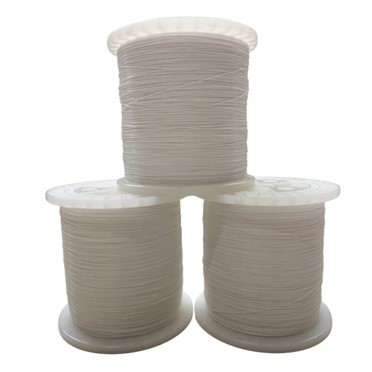
In the high-stakes worlds of automotive sensors, medical instrumentation, and aerospace electronics, standard cabling often fails. The Silver Plated Nickel (SPN) PTFE Wire represents the pinnacle of high-temperature conductor technology. By combining the mechanical strength of a pure nickel core with the superior conductivity of silver, and shielding it with extruded PTFE, Horle delivers a solution designed for environments where failure is not an option.
This technical analysis breaks down the critical specifications of SPN wire to help engineers understand its performance capabilities.
1. The Conductor: A Bi-Metallic Synergy
Unlike standard copper wires that suffer from "Red Plague" (corrosion) at high temperatures, the core of our wire is engineered for stability.
- The Core (Nickel 200/201): We utilize a pure nickel core which provides exceptional mechanical strength and inherent corrosion resistance. Nickel remains stable at temperatures exceeding 600°C, ensuring the wire maintains structural integrity even if the insulation is compromised.
- The Plating (High-Purity Silver): While nickel is strong, its conductivity is lower than copper. To solve this, we apply a precise layer of high-purity silver. This leverages the "Skin Effect"—where high-frequency signals travel along the outer surface of the conductor—drastically improving conductivity without sacrificing the thermal durability of the nickel core.
2. Plating Thickness & Solderability
The quality of the silver plating is the defining factor in wire performance.
- Thickness Specification: Horle adheres to strict standards, ensuring a silver plating thickness of ≥2μm (Microns).
- Why 2μm Matters: A coating thinner than 1μm is prone to porosity, leading to oxidation of the nickel core underneath. Our ≥2μm specification ensures a non-porous barrier that guarantees excellent solderability. This is crucial for manufacturing efficiency, as it allows for rapid, reliable wetting during the soldering process, minimizing cold joints in sensitive electronics.
- Wire Gauge: Available in sizes down to 0.25mm, suitable for micro-sensors and miniaturized medical devices.
3. Insulation: PTFE (Polytetrafluoroethylene)
The conductor is protected by an extruded PTFE jacket, chosen for its unmatched dielectric properties.
- Thermal Rating: Rated for continuous operation at 260°C, with short-term resistance to even higher spikes. This makes it ideal for engine bays and industrial ovens.
- Chemical Inertness: PTFE is chemically inert, meaning it is impervious to oils, fuels, solvents, and biological fluids. This feature is vital for automotive and medical applications where exposure to harsh fluids is common.
- Dielectric Strength: The insulation provides superior electrical isolation with a minimal wall thickness, allowing for a lighter, more flexible wire that fits into tight spaces.
Summary
The Silver Plated Nickel PTFE Wire is not just a cable; it is a precision component. By optimizing the balance between the nickel core's durability, the silver plating's conductivity, and the PTFE's thermal resilience, Horle provides a connection solution that outperforms standard silver-plated copper (SPC) in extreme environments.
FAQ
Q1: What is the main advantage of Silver Plated Nickel over Silver Plated Copper (SPC)?
A: The main advantage is temperature resistance and corrosion immunity. While SPC oxidizes at temperatures above 200°C (Red Plague), Horle's Silver Plated Nickel withstands temperatures up to 260°C (limited by PTFE) or higher (conductor only) without corroding, making it safer for long-term harsh environments.
Q2: Does the silver plating really improve conductivity?
A: Yes. Pure nickel has relatively low conductivity. The silver plating significantly reduces electrical resistance, especially for high-frequency signals (due to the Skin Effect), making it an excellent choice for signal transmission in sensors.
Q3: Is Horle's SPN wire suitable for medical applications?
A: Absolutely. The PTFE insulation is chemically inert and bio-compatible, while the silver-plated conductor ensures reliable signal transmission for sensitive medical instruments.
Q4: Can I customize the plating thickness?
A: Yes. While our standard is ≥2μm to ensure quality, Horle can manufacture wires to meet specific ASTM classes (such as Class 27) with thicker silver plating for specialized applications requiring higher conductivity.
Q5: How do you ensure the plating quality?
A: Horle employs rigorous X-ray fluorescence (XRF) testing to verify plating thickness and adhesion tests to ensure the silver layer does not peel or flake during handling and soldering.